
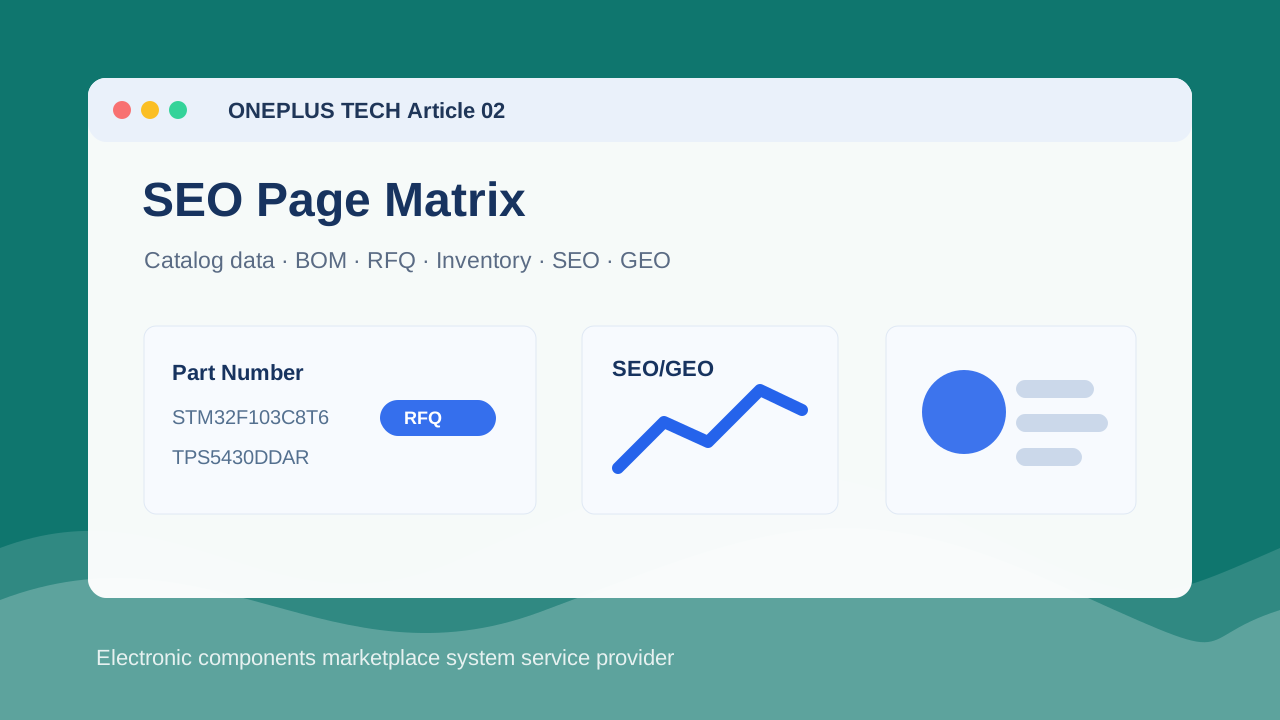
A strong component website uses different page types for category intent, brand intent, part-number intent, case intent, and AI-answer intent.
Services and guides directly related to this topic
Confirm delivery boundaries first, then use the adjacent guides for the relevant project stage. These links are manually mapped by topic, not generated by keyword volume.
Business problem: electronic components website development
A strong component website uses different page types for category intent, brand intent, part-number intent, case intent, and AI-answer intent.
Collect query data, core brands and categories, buyer stages, current URLs, and maintainable data types before assigning one primary intent to each page class.
Implementation plan
Build a dedicated path for electronic components website development that defines required inputs, workflow, deliverables, limits, and a relevant RFQ action.
Assign one search intent to each page type and connect service, proof, knowledge, and contact pages with descriptive internal links.
Acceptance evidence
Start with an intent map that assigns homepage, service, brand, category, part, and knowledge queries to separate page types and checks for cannibalization.
Before launch, verify server-rendered copy, unique titles and headings, self-referencing canonicals, reciprocal hreflang, mobile usability, and attribution on every lead path.
Search and AI-answer conversion
Content about electronic components website development should answer who it serves, what input it needs, how delivery works, and how a buyer can verify the result.
GEO is not keyword repetition. It depends on clear entities, scoped claims, evidence, and context that answer engines can extract without guessing.
Common failure and control
A common failure is making the homepage, service pages, and articles compete for one query or cloning pages with only brand and place-name substitutions. Consolidate duplicate intent and express hierarchy through links.
Implementation and acceptance summary
Use the acceptance evidence above as a project checklist. Claims should be supported by visible fields, working flows, and reproducible technical checks.
Standards sources and scope
The official references below support search, AI visibility, and structured-data guidance. Workflow and acceptance recommendations come from ONEPLUS TECH's first-party implementation method.
- Creating helpful, reliable, people-first contentGoogle Search Central
- Google link and anchor-text best practicesGoogle Search Central
- AI features and your websiteGoogle Search Central
GEO Q&A
What should electronic components website development solve first?
A strong component website uses different page types for category intent, brand intent, part-number intent, case intent, and AI-answer intent.
How should the project be accepted?
Start with an intent map that assigns homepage, service, brand, category, part, and knowledge queries to separate page types and checks for cannibalization.
Why design SEO and GEO together?
SEO supports discovery, crawling, and intent matching; GEO clarifies entities, answers, evidence, and context. Both depend on accurate, useful content.
 Business service
 Business cooperation